Dolmabahçe Palace
Back to all places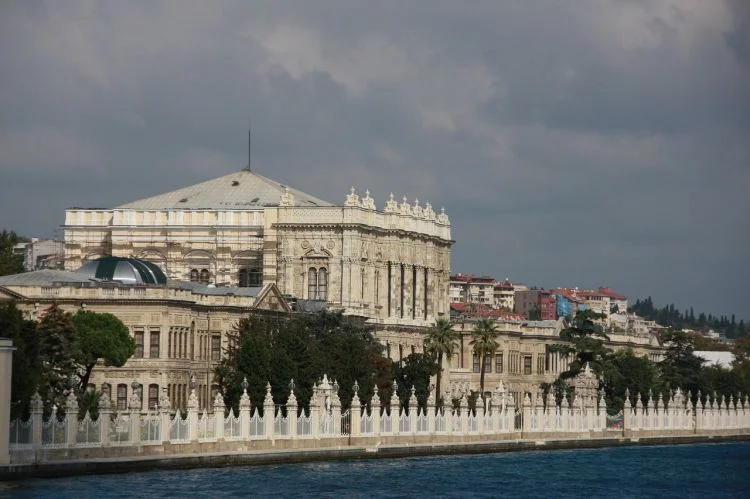
For nearly four centuries, the Ottoman Sultan and his very large family had lived in the medieval tiled frames of the Topkapı Palace at Seraglio Point, the site of the Byzantine Acropolis.
In the early 19th century, Sultan Mahmud II (1808-1839) enjoyed living in a large wooden palace in a "filled garden" (dolma bahçe) in a small valley on the banks of the Bosphorus.
Mahmut's son Sultan Abdülmecid (1839-1861), perhaps because of his father's preferences and the pleasant years of his youth in Dolmabahçe, decided to live here permanently. He commissioned the imperial architects of the Balyan family to demolish the old wooden structure and build a huge, luxurious new palace on the site.
It didn't matter to Sultan that he really didn't have the money for it. He was a sultan after all.
When it was completed, the Sultan abandoned Topkapi and moved his harem to Dolmabahçe.
The palace facade is nearly a quarter of a mile (400 meters) long, with 285 rooms and 43 large salons. Half a hectare (over an acre) of silk and wool Hereke carpets cover the floors. The Bohemian crystal chandelier in the world's largest Throne Room weighs 4-1/2 tons (4,000 kilograms) and has 750 lights.
Not bad for a guy who had trouble paying his mortgage...
https://turkeytravelplanner.com/galeri/istanbul/photopages/013.html
Photo: brannewk
41.03916, 29.00046