Hagia Sophia
Back to all places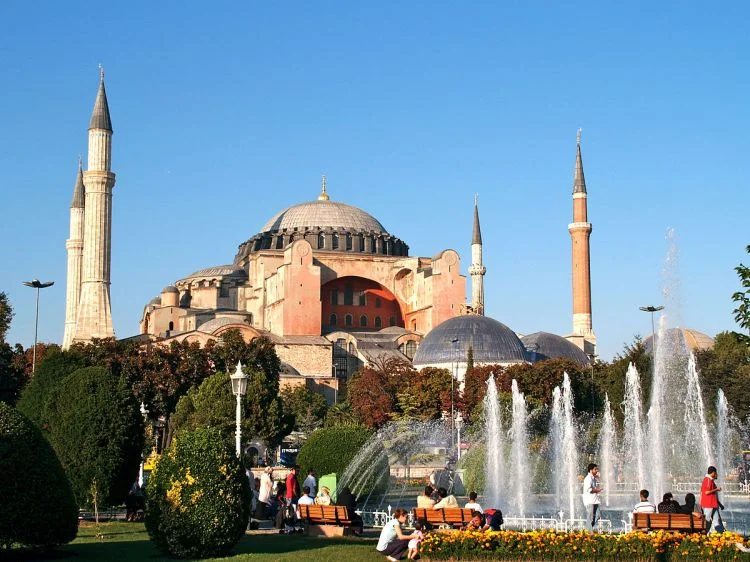
Hagia Sophia, one of the most prominent monuments in Istanbul, Turkey, hosts millions of visitors every year. It became a UNESCO World Heritage Site in 1985. It is located in Fatih, a district that includes the most historic areas of Istanbul (Sultanahmet).
Fortunately, it's right next to Topkapı Palace, the Blue Mosque, and the Byzantine Hippodrome, and right across the street from Yerebatan Sarnıcı, the basilica's cistern, making it easy to combine your visit with other historical sights.
Ayasofya has a long and varied history that represents the changes that have taken place throughout the history of Istanbul. From its construction in the 6th century until the Ottoman era in 1453, Hagia Sophia was originally used as a church. During the Ottoman period, it was converted into a mosque. In 1934, after the establishment of the Republic of Turkey, it became the Hagia Sophia Museum under the leadership of Turkey's secular founder, Mustafa Kemal Atatürk. However, on July 24, 2020, Hagia Sophia was officially converted into a mosque under Turkish President Recep Tayyip Erdoğan.
Due to its historical background and passing through the hands of different cultures, Hagia Sophia is an incredible blend of Islamic, Catholic, Pagan and Orthodox architecture and art inside and out. This is what makes Hagia Sophia so special, differentiating it from all the other mosques and churches in Istanbul.
Since the Hagia Sophia has been converted from a museum to a mosque, it is open 24 hours a day. However, only the visitors' section can be entered during prayer times. Since the conversion from a museum to a mosque, there is no entrance fee. As with other mosques, women must cover their heads and visitors must dress modestly.
https://turkeytravelplanner.com/go/istanbul/sights/sultanahmet/ayasofya.html
Photo: Dave Proffer
41.00858, 28.98017